
- Hebei Shenglei Insulation Materials Co., Ltd.
- WhatsApp:8616630881129
- Email: loraasmv@hotmail.com
- Tel: 8616630881129
Author:Shenglei Time:2026-09-23 16:02:24 Number of views:198Second-rate
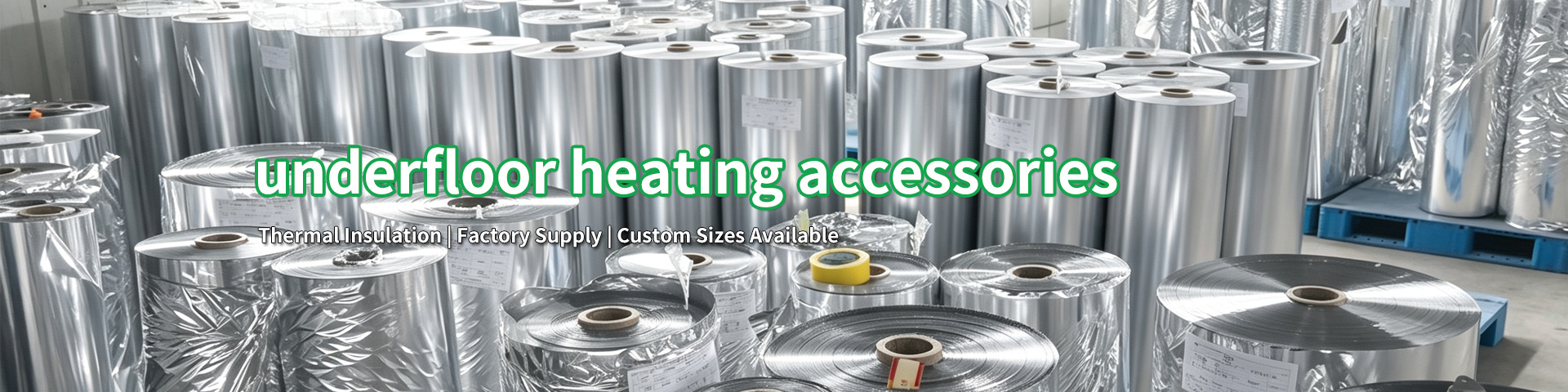
Reflective film is one of the most cost-effective upgrades you can make to an underfloor heating system. By reflecting radiant heat back into the room instead of allowing it to escape downward, a quality reflective film can noticeably reduce energy consumption and improve warm-up times. This guide explains how reflective film works and why it matters.
Underfloor heating pipes radiate heat in all directions. Without a reflective layer, much of that heat travels downward into the subfloor, where it is absorbed rather than used to heat the living space. Reflective film is typically made from a highly polished aluminum surface bonded to a reinforcing backing. When placed beneath the heating pipes, it reflects up to 97 percent of radiant heat back upward, ensuring more of the energy reaches the room.
Faster warm-up: With more heat directed upward, rooms reach comfortable temperatures more quickly.
Lower energy use: Reduced heat loss means the boiler or heat pump runs less often.
Even surface temperatures: Reflective film helps distribute heat more uniformly across the floor.
Vapor barrier: Many films also act as a moisture barrier, protecting the subfloor and insulation.
Easy installation: Rolls can be cut and laid quickly with basic tools.
Lay the film across a clean, level subfloor with the reflective side facing up. Overlap joints by at least 10 cm and seal them with aluminum foil tape to create a continuous barrier. Pay special attention to edges and pipe penetrations, where gaps can reduce effectiveness. Once the film is sealed, heating pipes or insulation boards can be installed on top as normal.
Look for a film with a high reflectivity rating, a durable reinforcing layer, and a width that minimizes joints. For projects over unheated spaces or ground floors, a film with a built-in vapor barrier is particularly valuable. Always check the manufacturer's recommendations for compatibility with your chosen insulation and pipe system.
Reflective film is a small investment that delivers measurable returns in comfort and efficiency. By maximizing the heat that stays in the room, it helps any underfloor heating system perform at its best.
[1] Underfloor Heating Systems: Design, Installation and Performance. Journal of Building Engineering, Elsevier.
[2] Thermal Analysis of Radiant Floor Heating Systems. Energy and Buildings, Elsevier.
[3] Materials and Components for Underfloor Heating. Construction and Building Materials, Elsevier.
Copyright © 2026-2027 Hebei Shenglei Insulation Materials Co., Ltd. All Rights Reserved