-
All
-
Underfloor Heating Staples
-
Underfloor Heating Reflective Film
-
Underfloor Heating Clips
-
Underfloor Heating Pipe Bend Guide
-
Underfloor Heating Pipe Sleeve
-
Mushroom Underfloor Heating Board
-
Aluminum Foil Tape
-
Underfloor Heating Pipe Unwinder
-
PVC Coated Straight Cut Wire
-
Underfloor Heating Perimeter Expansion Strip
-
Dry Underfloor Heating Module
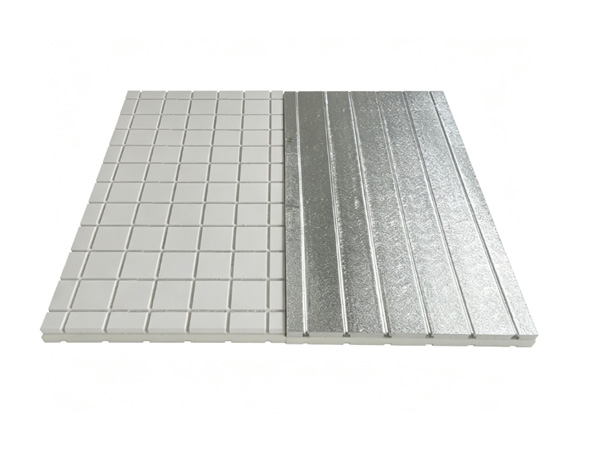
Dry Screed UFH Module
Dry Screed UFH Heating Module: Modern Floor Heating Without Wet Trades The dry screed UFH heating module is a lightweight, prefabricated alternative to traditional sand-and-cement s...

Product Details
Dry Screed UFH Heating Module: Modern Floor Heating Without Wet Trades
The dry screed UFH heating module is a lightweight, prefabricated alternative to traditional sand-and-cement screed underfloor heating. It combines the even warmth of underfloor heating with the speed of a dry installation, making it a favorite among installers, architects, and homeowners who want comfort without long project lead times. This article explains how dry screed modules work, their main benefits, suitable applications, and important selection criteria.
What Is a Dry Screed UFH Module?
A dry screed UFH heating module is a rigid panel system that holds underfloor heating pipes in precision-cut channels, replacing the traditional wet screed layer. The modules are typically manufactured from high-density expanded polystyrene (EPS), polyurethane, or gypsum-based boards, with pre-milled grooves designed for 16 mm or 20 mm pipes. Many modules incorporate an aluminum heat-spreading layer that transfers heat from the pipes across the entire floor surface. Because no liquid screed is poured, the system is fully dry, and floor finishes can be installed within a short time after pipe laying.
The term "dry screed" refers to the fact that the module performs the same function as a traditional screed — securing the pipes and spreading heat — without using wet materials. It is often used in timber-floor constructions, suspended floors, and refurbishment projects where a heavy wet screed would be impractical.
Core Benefits
Fast installation: Modules click together quickly, and pipes simply press into the grooves, cutting installation time dramatically.
No curing time: Eliminates the waiting period for traditional screed to dry, allowing the project to move forward without delay.
Lightweight: Much lighter than wet screed, reducing structural loads and making upper-floor and timber-frame installations straightforward.
Energy efficient: Low thermal mass allows the system to respond quickly to thermostat changes, reducing energy waste.
Uniform warmth: Integrated aluminum diffusion plates ensure even heat distribution and eliminate cold spots.
Versatile: Compatible with various floor finishes, including tile, stone, laminate, engineered wood, and luxury vinyl.
Heat pump friendly: Operates effectively at lower flow temperatures, matching the output characteristics of modern heat pumps.
How It Is Installed
The process starts with a clean, level subfloor or joist system. A layer of insulation or acoustic underlay may be laid first to reduce downward heat loss and improve comfort. The dry screed modules are then placed across the floor, grooves facing upward, and the heating pipes are pressed into the channels at the spacing recommended by the heat-loss calculation. Once the pipe network is complete and pressure-tested, a protective board or leveling layer is installed, and the chosen floor finish is laid directly over the system.
Because the modules are modular and easy to cut, they can be shaped around obstructions such as pipework, ducts, and built-in furniture. This flexibility makes them well suited to complex room layouts and open-plan spaces.
Project Types
Dry screed UFH modules are widely used in new residential builds, including houses, apartments, and extensions. They are also a popular choice for renovation and retrofitting, where old floors must be upgraded without major structural work. In commercial settings, the modules are specified for offices, retail spaces, showrooms, and community buildings. Their low profile and lightweight nature also make them suitable for mezzanine floors, basements, and any location where screed weight or thickness is a constraint.
Selecting the Right Module
When choosing a dry screed UFH heating module, consider the required insulation value, groove spacing options, compatibility with your heating pipe diameter, and the maximum compressive strength needed for the intended floor load. Check whether the module includes a built-in aluminum heat-spreader and whether it is certified for use with heat pumps. Working with a reputable supplier that provides system design, manifold sizing, and technical support will ensure the best long-term results.
Conclusion
The dry screed UFH heating module offers a practical, efficient, and fast solution for modern underfloor heating. By replacing wet screed with prefabricated, lightweight panels, it reduces project time, minimizes structural impact, and delivers even, comfortable warmth. For homeowners and contractors alike, dry screed modules represent a smart way to bring efficient floor heating into a wide range of buildings.