-
All
-
Underfloor Heating Staples
-
Underfloor Heating Reflective Film
-
Underfloor Heating Clips
-
Underfloor Heating Pipe Bend Guide
-
Underfloor Heating Pipe Sleeve
-
Mushroom Underfloor Heating Board
-
Aluminum Foil Tape
-
Underfloor Heating Pipe Unwinder
-
PVC Coated Straight Cut Wire
-
Underfloor Heating Perimeter Expansion Strip
-
Dry Underfloor Heating Module
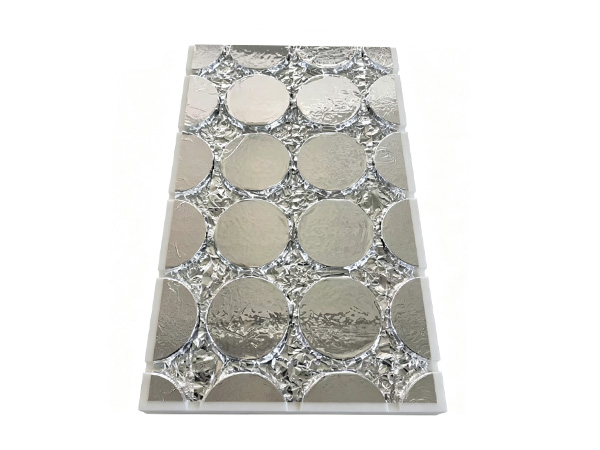
Underfloor Heating Dry Installation Panel
Underfloor Heating Dry Installation Panel: A Practical Guide to Quick Floor Warming The underfloor heating dry installation panel has become a go-to choice for contractors seeking a...

Product Details
Underfloor Heating Dry Installation Panel: A Practical Guide to Quick Floor Warming
The underfloor heating dry installation panel has become a go-to choice for contractors seeking a fast, clean, and reliable underfloor heating solution. Designed for straightforward installation without wet trades, these panels provide a stable base for heating pipes and distribute warmth efficiently across the floor. This guide covers how dry installation panels work, their advantages, typical installation methods, and the types of projects they suit best.
What Is a Dry Installation Panel?
A dry installation panel is a pre-formed board used in underfloor heating systems to hold heating pipes in place without the need for a sand-and-cement screed. The boards are usually manufactured from high-density polystyrene, gypsum fiber, or similar rigid materials, with precisely routed grooves that match common pipe diameters, typically 16 mm or 20 mm. Many panels include a layer of aluminum foil underneath or on the surface to improve horizontal heat spread. Because the pipes clip into the grooves rather than being embedded in wet material, the installation process is faster and the finished floor can be laid on the same day.
The dry panel approach is sometimes referred to as "dry underfloor heating" or "screedless underfloor heating," and it is widely used in both new-build and refurbishment projects where speed and minimal structural load matter.
Key Advantages
Speedy on-site installation: Panels can be cut, laid, and piped in hours rather than days, dramatically shortening the overall program.
No wet trade drying time: Eliminates the multi-week cure period associated with traditional screed systems.
Low-profile construction: Available in thin profiles to suit low floor-to-ceiling heights and retrofit projects.
Excellent heat distribution: Aluminum conduction layers ensure warmth spreads evenly and reduces response time.
Structural friendliness: Lightweight boards reduce dead load, making them ideal for upper floors and timber joist constructions.
Improved energy efficiency: Fast warm-up and cool-down allow better zoning and lower running costs.
Cleaner working environment: No wet mixing, no screed trucks, and less mess on site.
Installation Steps
Installation begins with a clean, flat subfloor. Any unevenness should be corrected, and a suitable underlay or vapor barrier may be installed depending on ground conditions. The dry panels are then laid across the room, grooves aligned, and joints fitted together. The heating pipe is pressed firmly into the grooves, maintaining the correct center-to-center spacing recommended by the heat-loss calculation. After the pipe network is pressure-tested, a protective layer is installed, and the finished floor covering is laid directly over the panels.
For projects using tile or stone, a thin self-levelling compound may be applied over the panels before tiling. For laminate or engineered wood, a suitable underlay is typically required. Always follow the floor covering manufacturer's guidance on surface temperature limits.
Suitable Applications
Dry installation panels are commonly used in domestic living spaces, kitchens, bathrooms, and bedrooms. They are also popular in commercial settings such as offices, showrooms, restaurants, and hotels. In renovation projects, they can be installed over existing concrete or timber floors, provided the subfloor is structurally sound and sufficiently flat. For heritage or listed buildings, the minimal structural impact and quick installation make dry panels an attractive heating upgrade option.
Choosing the Right Panel
When selecting an underfloor heating dry installation panel, consider the pipe diameter used, the required insulation thickness, the compressive strength needed for the finished floor load, and the heat output rating. Panels with integrated aluminum foil generally offer better thermal performance. It is also worth checking whether the panel is compatible with heat pumps, as many modern dry systems are designed to operate efficiently at lower flow temperatures.
Conclusion
Dry installation panels make underfloor heating faster, cleaner, and more versatile than ever. By combining modular boards, precision grooves, and effective heat conduction, they deliver a comfortable, even warmth that suits a wide range of residential and commercial projects. With careful design and professional installation, dry panels offer a practical path to efficient modern floor heating.