-
All
-
Underfloor Heating Staples
-
Underfloor Heating Reflective Film
-
Underfloor Heating Clips
-
Underfloor Heating Pipe Bend Guide
-
Underfloor Heating Pipe Sleeve
-
Mushroom Underfloor Heating Board
-
Aluminum Foil Tape
-
Underfloor Heating Pipe Unwinder
-
PVC Coated Straight Cut Wire
-
Underfloor Heating Perimeter Expansion Strip
-
Dry Underfloor Heating Module
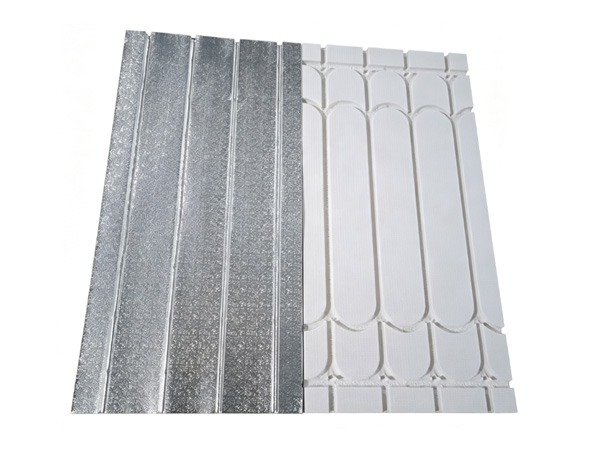
UFH Dry Floor Heating Panel
UFH Dry Floor Heating Panel: Efficient and Quick-Install Underfloor Heating Solution The UFH dry floor heating panel is a modern, prefabricated underfloor heating component designed...

Product Details
UFH Dry Floor Heating Panel: Efficient and Quick-Install Underfloor Heating Solution
The UFH dry floor heating panel is a modern, prefabricated underfloor heating component designed to simplify installation while delivering comfortable and energy-efficient warmth. Engineered for both residential and commercial projects, these dry panels eliminate the need for wet screed, making them ideal for renovations, lightweight constructions, and retrofit applications. This article explores the design, benefits, installation process, and application scenarios of UFH dry floor heating panels.
Understanding UFH Dry Floor Heating Panels
An UFH dry floor heating panel is a rigid board, typically made from expanded polystyrene (EPS), polyurethane, or fiber-reinforced gypsum, with pre-machined grooves that accommodate standard underfloor heating pipes. Unlike traditional wet underfloor heating systems that embed pipes in a cement or sand-and-cement screed, dry panels hold the pipes mechanically. A layer of aluminum foil or thermal conduction plate is usually integrated to spread heat evenly across the surface. Because no liquid screed is used, the system is described as "dry" and can be covered with the final floor covering almost immediately.
The panel thickness varies depending on insulation requirements, commonly ranging from 20 mm to 50 mm. Most panels are compatible with 16 mm or 20 mm PEX, PE-RT, or composite pipes, with groove spacings of 75 mm, 100 mm, 150 mm, or 200 mm to match the heating demands of different rooms.
Main Benefits of Dry UFH Panels
Rapid installation: Panels can be laid by a small crew in a fraction of the time required for wet systems, and the finished floor can be installed on the same day.
No drying period: Eliminates the weeks of waiting for screed to cure, reducing overall project duration and allowing earlier handover.
Lightweight and thin: Minimal load on the structure and low build-up height, making them suitable for upper floors, timber frames, and refurbishments with limited floor-to-ceiling height.
Uniform heat distribution: Integrated aluminum heat-spreaders prevent hot spots and ensure a consistent floor surface temperature.
Energy efficiency: Lower thermal mass enables faster response to thermostat signals, reducing energy consumption and operating costs.
Heat pump compatible: The low surface temperature and efficient heat transfer make dry panels a natural partner for air-source and ground-source heat pump systems.
Reduced structural stress: No heavy wet screed means less load on joists, slabs, and foundations.
Installation Overview
Installing an UFH dry floor heating panel starts with preparing a clean, level subfloor. A vapor barrier or insulation layer may be required depending on the subfloor condition. The panels are then laid across the floor, grooves facing upward, and the heating pipes are pressed into the channels. Once the entire loop is laid, the pipe ends are connected to the manifold. A protective layer or leveling compound is added, and the chosen floor finish, whether tile, laminate, engineered wood, or vinyl, is installed on top.
Because the panels are lightweight and modular, cutting and shaping around doorways, corners, and built-in furniture is straightforward. Many installers appreciate the clean working environment and the absence of wet trades on site.
Where Dry UFH Panels Are Used
Dry floor heating panels are widely specified in living rooms, bedrooms, kitchens, bathrooms, and open-plan spaces. They are also commonly used in offices, retail showrooms, hotels, and community buildings. The system is especially popular in renovation projects where removing old screed is impractical, and in new timber-frame or steel-frame constructions where lightweight flooring is preferred. In retrofit projects, dry panels can be installed on top of existing floors with minimal height increase.
Key Considerations When Choosing Panels
Selecting the right UFH dry floor heating panel involves evaluating insulation values, compressive strength, groove compatibility with your chosen pipe diameter, and heat-transfer efficiency. It is also important to match the panel to the floor covering: tile and stone conduct heat well, while wood and laminate require surface temperature limits and underlay guidance. Consulting the manufacturer's technical data and obtaining a system design for pipe spacing, manifold sizing, and heat output will ensure long-term performance.
Conclusion
The UFH dry floor heating panel combines speed, flexibility, and comfort in one efficient system. By removing the need for wet screed, it opens up underfloor heating to a much wider range of projects, from renovation to lightweight new builds. With proper design, quality materials, and professional installation, dry UFH panels deliver quiet, even, and energy-efficient warmth that enhances any indoor environment.