-
All
-
Underfloor Heating Staples
-
Underfloor Heating Reflective Film
-
Underfloor Heating Clips
-
Underfloor Heating Pipe Bend Guide
-
Underfloor Heating Pipe Sleeve
-
Mushroom Underfloor Heating Board
-
Aluminum Foil Tape
-
Underfloor Heating Pipe Unwinder
-
PVC Coated Straight Cut Wire
-
Underfloor Heating Perimeter Expansion Strip
-
Dry Underfloor Heating Module
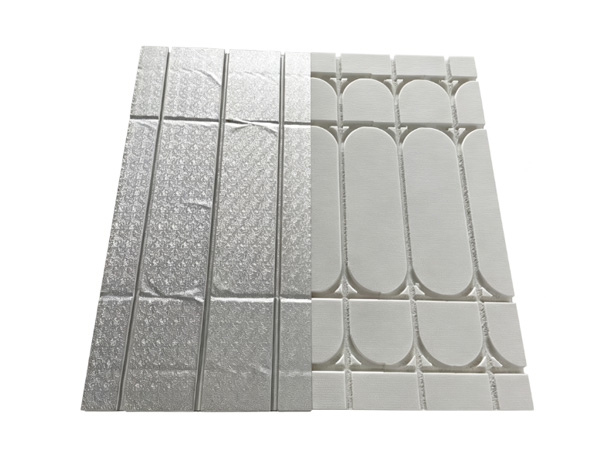
Dry Underfloor Heating Module
Dry Underfloor Heating Module: Complete Guide to Efficient Floor Warming A dry underfloor heating module represents one of the most advanced and time-saving solutions for modern und...

Product Details
Dry Underfloor Heating Module: Complete Guide to Efficient Floor Warming
A dry underfloor heating module represents one of the most advanced and time-saving solutions for modern underfloor heating installations. Unlike traditional wet underfloor heating systems that require screed, drying time, and heavy structural loads, a dry module system installs directly over the subfloor and allows flooring to be laid within hours. This guide explains how dry underfloor heating modules work, their key benefits, typical applications, and why contractors and homeowners increasingly choose them.
What Is a Dry Underfloor Heating Module?
A dry underfloor heating module is a prefabricated panel or board designed to hold heating pipes (usually PEX, PE-RT, or multi-layer composite pipe) in precise spacing without the need for a cement screed. Most modules come with pre-engraved grooves, raised fins, or aluminum heat-transfer plates that spread heat evenly across the floor surface. Because the system is "dry," no water-based leveling compound or liquid screed is poured on site. The pipes simply click into the pre-shaped channels, and the finished floor covering (laminate, engineered wood, tile, or luxury vinyl) is installed on top.
The core advantage is thermal efficiency. The integrated aluminum foil or heat-spreading layer ensures that heat travels horizontally rather than just vertically, reducing warm-up time and lowering overall energy consumption compared with loose-pipe dry systems without heat conduction plates.
Key Features and Advantages
Fast installation: Panels can be laid in a single day, and final flooring can be installed almost immediately, dramatically reducing project timelines.
No screed required: Eliminates weeks of waiting for wet screed to dry, making the system ideal for renovation and retrofitting projects.
Lightweight structure: Suitable for upper floors, timber joist constructions, and buildings with limited load-bearing capacity.
Even heat distribution: Embedded aluminum diffusion plates ensure consistent surface temperatures and eliminate cold spots.
Energy efficient: Lower thermal mass means the system responds quickly to thermostat changes, allowing precise temperature control and reduced running costs.
Compatible with heat pumps and boilers: Dry modules operate at lower flow temperatures, making them an excellent match for air-source or ground-source heat pumps.
Space saving: No bulky radiators are needed, leaving walls free for furniture and interior design.
How the Dry Module System Works
The installation process begins with a clean, level subfloor. A layer of insulation board is first laid to prevent downward heat loss. The dry heating modules are then placed on top, and the heating pipe is pressed into the pre-cut grooves at the manufacturer's recommended spacing (typically between 75 mm and 200 mm depending on room heat loss). Once the pipe network is laid, a barrier layer or protective board is added, and the chosen floor finish is installed directly over the system.
Warm water from the heat source circulates through the pipes. Heat radiates upward through the heat-spreading plate and into the room. Because the thermal mass is lower than in a screed-based system, the floor warms up quickly, and the room reaches a comfortable temperature within one to two hours of switching on.
Typical Applications
Dry underfloor heating modules are widely used in residential projects such as living rooms, bedrooms, kitchens, and bathrooms. They are also popular in commercial environments including offices, showrooms, hotels, and shops. The system is particularly favored in renovation projects where floor height is limited and structural modification must be kept to a minimum. In new-build timber-frame or lightweight construction, dry modules reduce the overall load on the building structure and shorten construction schedules.
Choosing the Right Module for Your Project
When selecting a dry underfloor heating module, several factors should be considered. Pipe diameter compatibility is essential — most systems accept 16 mm or 20 mm pipes. Insulation thickness depends on whether the installation is over a heated room, a suspended floor, or an unheated basement. Heat-spreading performance, board density, and compressive strength also affect long-term comfort and durability. Finally, check that the module is compatible with your chosen floor covering, since tile, stone, laminate, and engineered wood each have different requirements regarding thermal conductivity and surface temperature limits.
Why Choose a Quality Manufacturer?
For installers and project managers, partnering with an experienced dry underfloor heating module supplier ensures consistent board dimensions, accurate groove alignment, and reliable material quality. Reputable manufacturers offer technical support, system design assistance, and product warranties that give both installers and end customers confidence. Choosing certified components also helps ensure compatibility with heat pumps and meets local building regulations.
Conclusion
The dry underfloor heating module continues to transform modern floor heating by combining fast installation, low structural weight, and excellent thermal performance. Whether for new construction, renovation, or commercial fit-out, a well-designed dry module system delivers comfortable, quiet, and energy-efficient warmth throughout the year. By selecting quality materials and professional installation, property owners can enjoy a cleaner, more efficient heating solution that enhances both living comfort and long-term property value.