Mirror Reflective Film for Underfloor Heating and Heat Loss
Author:shenglei Time:2026-09-30 17:07:39 Number of views:131Second-rate
Mirror Reflective Film for Underfloor Heating
Underfloor heating warms a floor so the heat rises into the room, yet a real share of that energy heads the wrong way, down into the subfloor, unless something sends it back. Mirror reflective film is the thin, high-gloss layer that does exactly that.
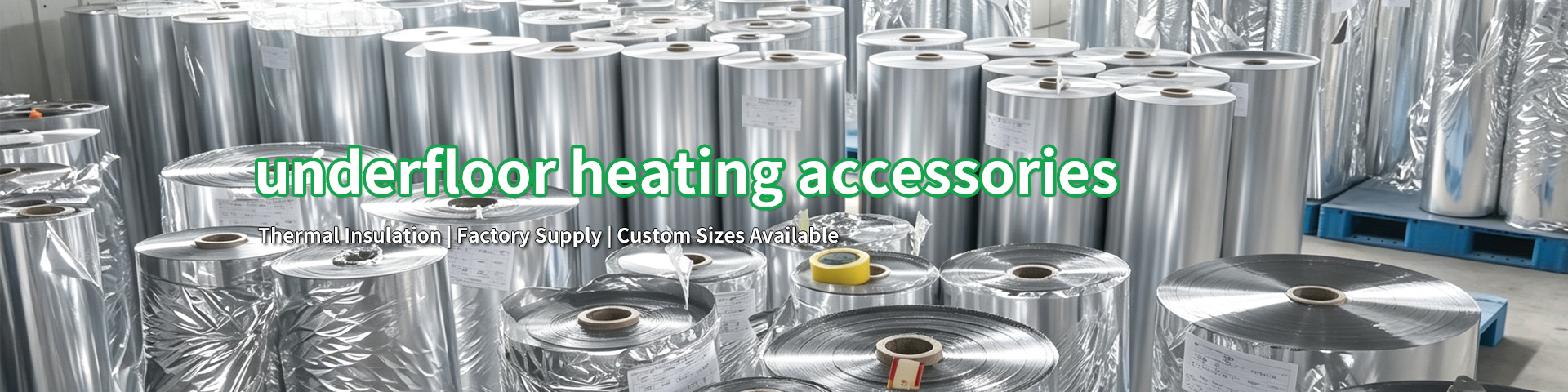
The supplier provides this product as rolls of metallised sheeting with a near-mirror surface. Laid over the insulation board, it gives radiant heat a bright face to bounce off, so more of the warmth you pay for stays in the living space.
What mirror reflective film is
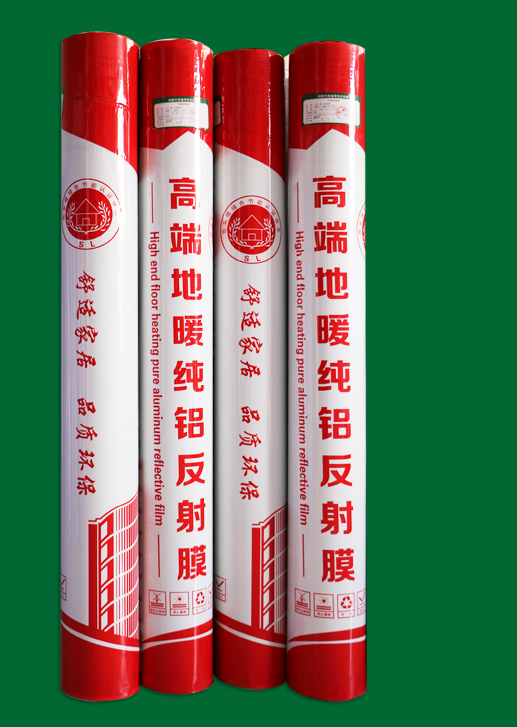
Mirror reflective film is a flexible sheet built around a metallised layer with a polished, mirror-like face. The base is usually a polymer film or light composite, and the reflective side carries a vacuum-deposited aluminium coating. The outcome is a product that looks like foil but behaves as a tuned reflector rather than a simple moisture barrier.
Unlike plain bubble wrap, the point is surface quality. A flatter, cleaner finish returns a higher fraction of long-wave infrared, the heat you actually feel. The factory rolls it in practical widths so an installer can cover a room quickly, and the supplier ships it wrapped so the bright face stays protected until the day of the fit.
How the mirror finish reflects heat
Radiant heat travels as infrared waves, and a shiny surface reflects them much as a mirror reflects light. When the pipe or cable warms the floor above, the downward portion of that radiation meets the film and is thrown back up. The higher the surface reflectance, the less heat sinks into the concrete or insulation below.
This is a surface effect, not the air-trapping that bulk insulation does. Reflection earns its place by facing the heat with one bright, unbroken plane; small scratches scatter a little energy, but a well-made sheet still returns most of it. The gain appears as a room that reaches temperature sooner and holds it with less input.
Where it sits in the floor build-up
In a wet build the order from the bottom is subfloor, insulation board, reflective film, then the pipe or cable, and finally screed. The film rests directly on the insulation with its bright side turned up toward the heating element. Dry systems follow the same logic: film over the board, mesh or rail on top to hold the pipe, finished floor above.
Keeping the reflective face upward is the decision that decides whether the product works. The manufacturer will stress that film complements insulation rather than replacing it. The board slows conductive loss; the film returns radiant loss. Both together give the floor its efficiency, and leaving out either one sacrifices performance.
Handling and joining sheets
On site the film is unrolled across the insulation and trimmed to the room. Edge overlaps should stay tidy and consistent, with reflective faces meeting rather than doubling into a thick ridge. A small overlap is fine; a large one only wastes material and creates a step.
Joins are sealed with the tape the supplier recommends, often an aluminium foil tape that keeps the surface continuous. Gaps let heat find a path down, so the goal is a near-unbroken bright plane. Crews should avoid walking the face more than needed, since grit and scuffs dull the finish, and rolls are best stored flat in a dry place until laid.
Pairing with insulation and mesh
The film works best over a flat, stable insulation board. Gaps or steps in the board show through and cast shadows in the reflector, so the substrate should be even before the roll goes down. The factory grades film to match common board thicknesses and room sizes.
Mesh or clip rail laid on top holds the pipe at the right height and keeps the reflective plane clear. Where a build uses a separate vapour layer, the installer confirms the film still faces the heat and is not buried the wrong way. For renovations the film is a cheap, fast upgrade that redirects heat once lost downward into the floor below.
What to check when specifying film
Specifiers should confirm the reflectance value and base material, since these decide how much infrared the sheet returns. Width, roll length and thickness affect wastage and labour; a film too narrow multiplies joins, while one matched to the room saves both time and tape.
Check the fire rating and any local compliance the project demands, and confirm the product stays stable at the temperatures the floor will reach. The distributor should supply test data rather than a vague claim. Surface durability, tear strength and how it behaves when taped are worth a quick look before a large order is placed.
How a manufacturer supplying reflective film supports the build
A supplier that makes the film in its own factory keeps reflective quality consistent from one roll to the next, which matters more than a single impressive sample. When the same plant also makes insulation and fixings, the parts are designed to work together instead of being matched after the fact.
Hebei Shenglei Thermal Insulation Materials Co., Ltd. runs this kind of integrated line, manufacturing underfloor heating insulation, plastic fasteners and the reflective film that ties them together, with export rights reaching distributors across several markets. The factory offers customization on roll width, thickness and marking, so a distributor can order film sized to a regional standard or a private-label program, with OEM options for branded ranges.
References
BS EN 1264-4:2008. Water based surface embedded heating and cooling systems — Part 4: Installation. CEN.
BS 8204-1:2002+A1:2009. Screeds, bases and in-situ floorings — Part 1: Concrete bases and screeds. BSI.
BS EN 1264-2:2008. Water based surface embedded heating and cooling systems — Part 2: Floor heating: determination of the heating output. CEN.