Underfloor Heating on Concrete Slabs: The Accessory Plan
Author:shenglei Time:2026-09-30 17:09:42 Number of views:81Second-rate
Underfloor Heating on Concrete Slabs: Accessory Plan
Underfloor heating laid directly onto a concrete ground floor is one of the most efficient ways to warm a building. The slab acts as thermal mass, storing heat and releasing it slowly, which suits both comfort and running costs. A successful installation depends less on the boiler or manifold and more on the accessory set that sits between the bare concrete and the screed.
This plan covers the components a contractor needs when fixing pipe to a slab: insulation board, reflective film, staples or fixing strips, pipe sleeves, perimeter expansion strip and sealing tape. Each part earns its place, and the right sequence avoids the callbacks that follow a poorly detailed slab.
Why concrete slabs suit UFH
Concrete slabs make a natural base for embedded heating. They are flat and already part of the structure, so there is no need for a suspended deck or extra joists. The slab's density lets it absorb heat during off-peak hours and release it through the day, smoothing the temperature curve and reducing boiler cycling.
Ground floors on concrete also stay dry once the damp-proof course is in place, protecting insulation and film from moisture. The trade-off is thermal bridging: a bare slab bleeds heat into the ground. A continuous insulation layer and reflective film sit on the concrete before any pipe is laid, so the slab stops being a heat sink.
Insulation and reflective layer
The first job on a concrete base is to break the downward heat path. Extruded or expanded polystyrene board, or a mineral wool panel rated for floor loads, gives the pipe a stable bed. The supplier grades thickness to the project, with 20 to 50 mm typical for retrofits where floor height allows.
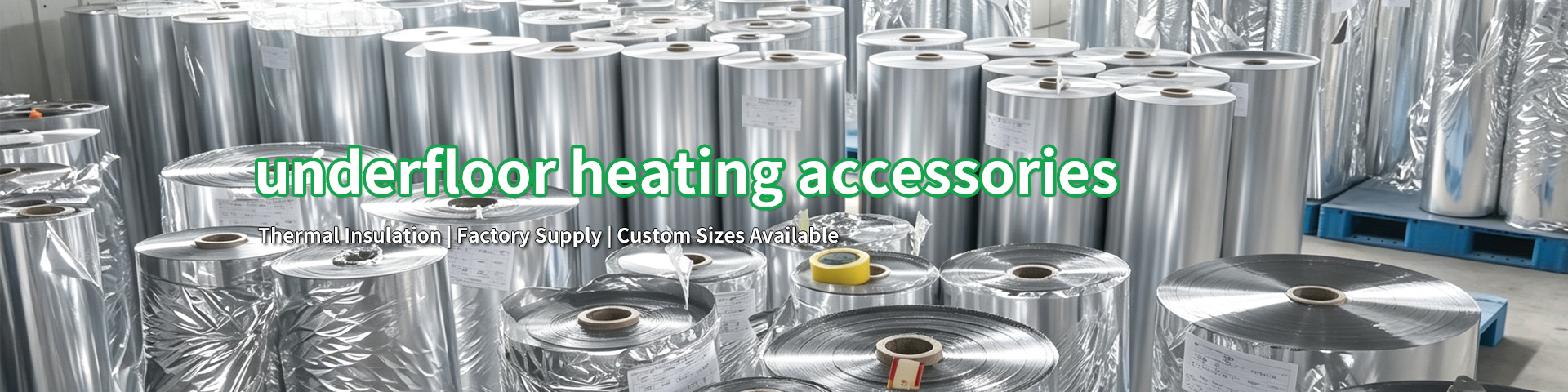
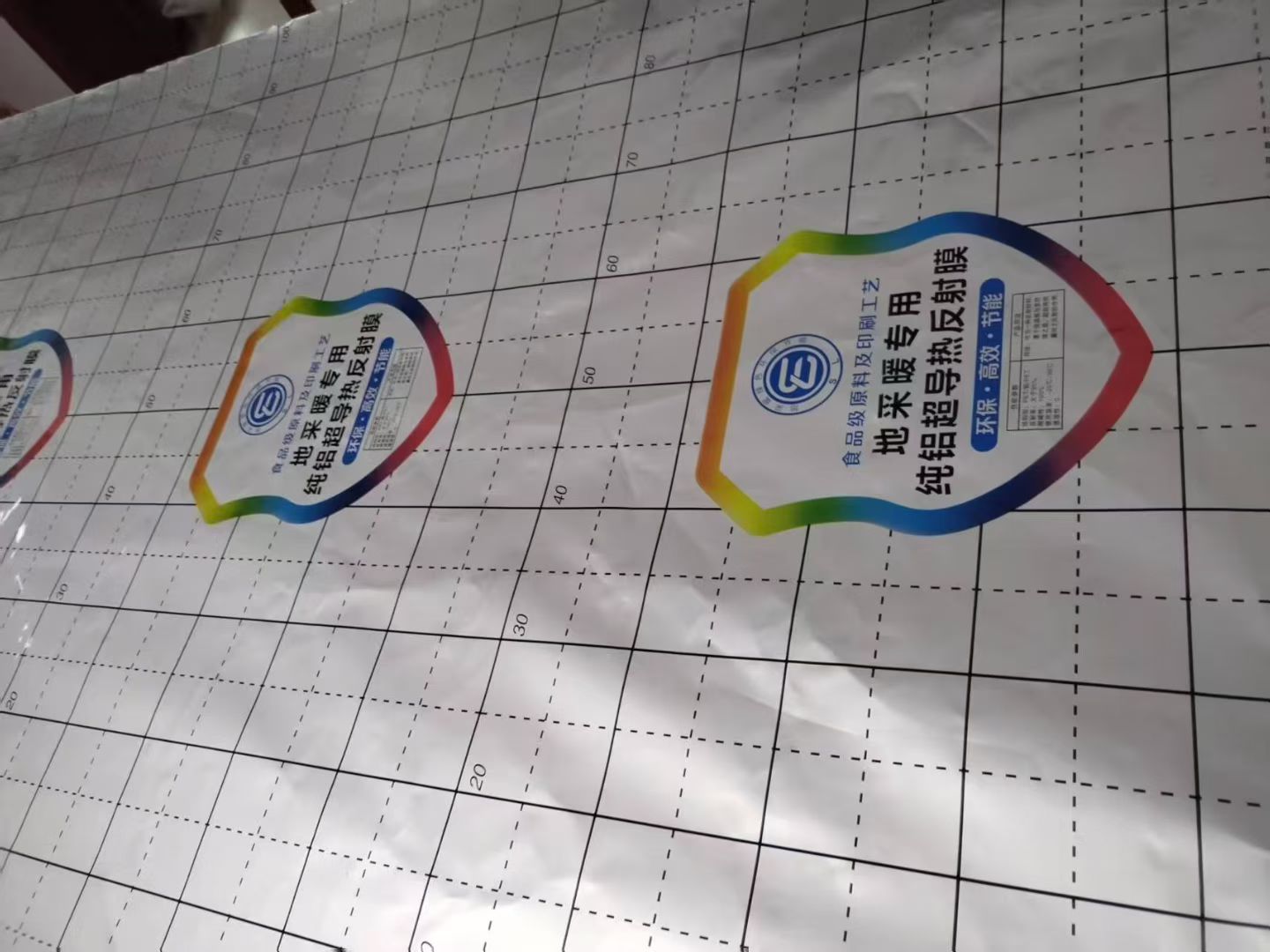
Above the board goes a reflective layer, an aluminium-laminated film that directs radiant heat upward instead of letting it soak into the screed. The film marks pipe runs and protects the insulation face during laying. Tape seals overlaps so no gaps let heat escape or moisture creep in, and a clean lay pays back across the floor.
Fixing pipe to the slab
With the bed prepared, the pipe needs securing without trapping it against the concrete. Staples fired through the film into the insulation hold runs on softer boards, while plastic fixing strips suit higher loads and faster gangs. The factory that manufactures these clips tunes the leg and profile so the pipe sits at a set height and cannot lift during the screed pour.
Spacing follows the design load, but the detail that matters on site is restraint: every run, bend and manifold drop should be pinned so the screed cannot float or kink the pipe. Where pipe crosses a movement joint in the slab, it is sleeved and left free to move. Good fixing turns a tangle of pipe into a repeatable circuit.
Edge and movement detailing
The perimeter of the slab is where most UFH builds fail if ignored. A perimeter expansion strip, a closed-cell foam band fixed to the wall, absorbs the screed's expansion and stops it cracking or lifting skirtings. The same strip breaks the thermal bridge that would short-circuit heat into the wall.
Door thresholds, room divides and any place the screed butts a fixed element need the strip too. Tape seals the film to the strip so the edge detail stays continuous. The distributor supplying a full kit matches the strip height to the finished floor build-up; a strip too short leaves a gap and one too tall shows above the floor.
Pipe protection at penetrations
Pipe does not stop at the room edge. It passes through walls to the manifold, through slabs at doorways, and sometimes through structural elements. At every penetration the pipe needs a sleeve: a smooth, often corrugated plastic tube that lets it slide and protects it from abrasion or compression.
Sleeves also matter where pipe crosses a movement joint, letting pipe and screed move independently. The sleeve should be long enough to clear the structure and sealed at the ends so screed cannot enter. A manufacturer that supplies sleeve stock in several diameters saves the site from improvising with offcut pipe, a common source of later leaks.
Screed and curing considerations
The accessory plan does not end when the pipe is laid. The screed that covers it must be placed and cured so the system reaches temperature without cracking. A quality screed with controlled drying, kept off high heat until it has strength, protects the pipe and the reflective detail beneath.
During the pour, the pipe is watched so any damage shows before the screed sets. After curing, a gentle commissioning heat ramp proves the loops. The factory advises on sleeve and strip positions that keep the screed monolithic yet free to expand, the quiet difference between a floor that lasts and one that cracks in the first winter.
How a manufacturer supplying slab accessories supports the build
A concrete-slab UFH job runs smoothest when one source supplies the full set rather than a mix of brands. Buying insulation, film, fixings, sleeves, strip and tape together means the parts work as a system, quantities match the floor area, and questions go to a single contact.
The supplier can also support export orders and OEM or customization requests, labelling and packing the kit to a distributor's specification. For a builder laying UFH on concrete, that reduces waste, speeds the gang, and keeps the liability chain short. Hebei Shenglei Thermal Insulation Materials Co., Ltd. manufactures this slab accessory range from Hejian, Hebei, and supplies contractors and distributors with a complete, matched set built for the concrete ground floor.
References
BS EN 1264-4:2008. Water based surface embedded heating and cooling systems — Part 4: Installation. CEN.
BS EN 1264-2:2008. Water based surface embedded heating and cooling systems — Part 2: Determination of the design heat output. CEN.
BS 8204-1:2002+A1:2009. Screeds, bases and in-situ floorings — Part 1: Concrete bases and screeds. BSI.