Plastic vs Metal Underfloor Heating Staples for Pipe Fixing
Author:shenglei Time:2026-10-07 11:24:27 Number of views:166Second-rate
Plastic vs Metal Underfloor Heating Staples
Underfloor heating only performs as well as the pipe-fixing method beneath it. Every loop of pipe has to be held tight against the insulation board so that heat transfers upward into the screed rather than leaking sideways or lifting during the pour. The small component doing that job is the staple, and the material it is made from shapes how the whole installation behaves.
Installers tend to choose between plastic staples, supplied as continuous strips or as individual units, and metal staples driven by a hammer or a staple gun. Each option has a legitimate place, so the comparison below is drawn from the way floors are actually built and matched to the base, the pipe and the site conditions in front of you.
Why staple material matters
The staple is the only thing standing between a pressurised pipe and the insulation board during a screed pour. If it creeps, the pipe rises, the cover depth changes, and heat output becomes uneven across the floor. Material affects stiffness, friction against the pipe, resistance to the wet and alkaline environment of fresh screed, and how easily the fixing can be adjusted before commissioning. A staple that holds on a dry test panel can fail once concrete is poured over it, so the decision deserves more thought than the price per box suggests.
Plastic staples explained
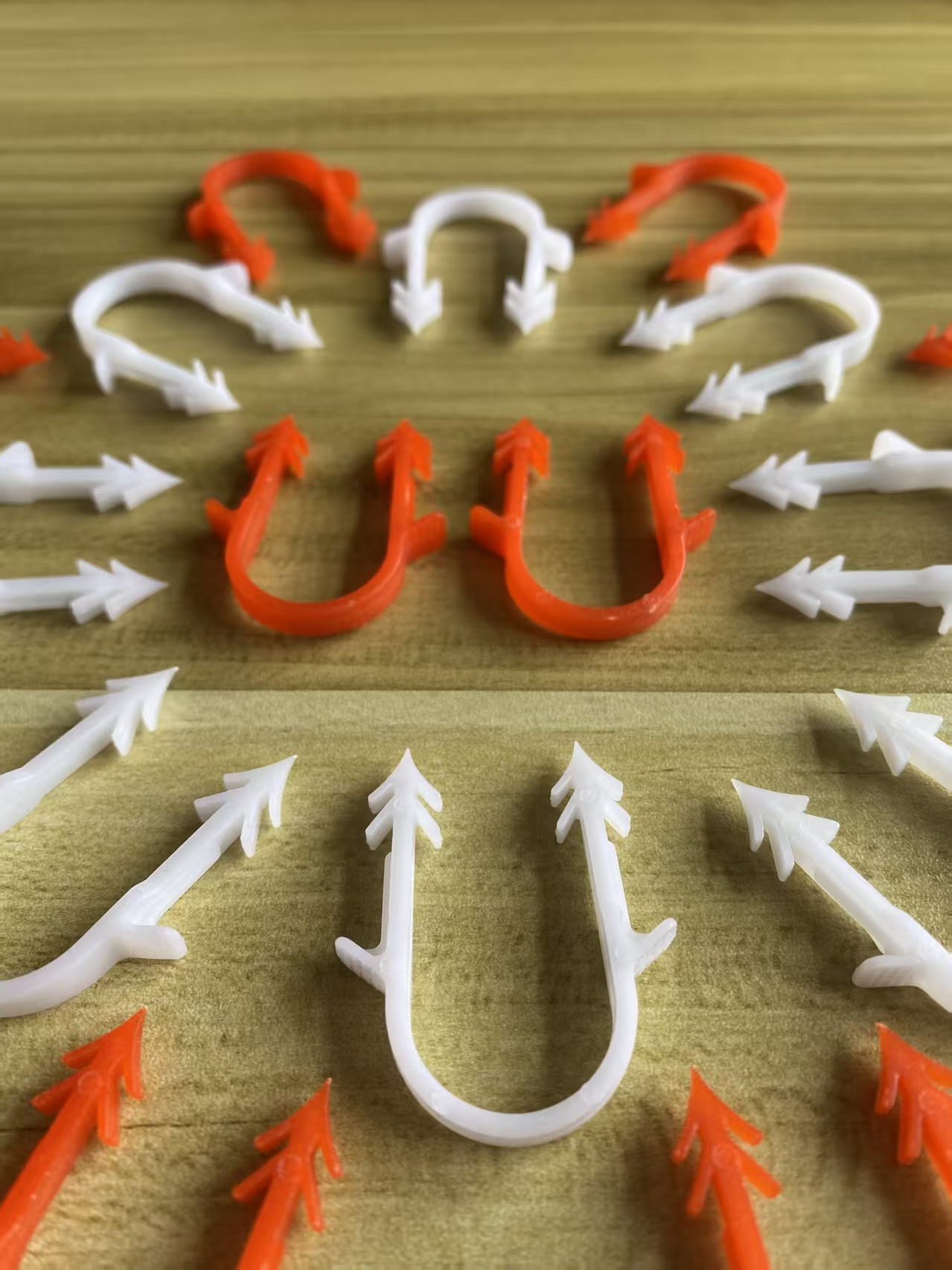
Plastic staples are moulded from polymers such as polyamide or polypropylene, and they grip the pipe with a barbed or ridged profile that bites into the insulation. They are usually sold in collated strips that feed through a dedicated gun, though single units are available for detail work and repairs. Because they do not rust, they are popular over foil-faced and EPS or XPS insulation boards where a metal fixing could eventually stain or corrode. They are also lighter to carry and produce no sharp edges, which reduces the chance of nicking a pipe during a fast installation. Their holding strength depends heavily on the density of the board beneath them.
Metal staples explained
Metal staples, typically galvanised or stainless steel, are driven through a plastic clip or directly over the pipe. They offer high initial holding power and suit denser substrates and thicker pipe where a plastic barb struggles to penetrate. A metal staple can be tapped home with a hammer or set with a powered gun, which speeds up large open areas. The trade-off is corrosion risk in damp screeds and the need to avoid over-driving, since a staple set too deep can crush the pipe wall or cut into the insulation surface.
Corrosion and chemical resistance
Fresh screed is chemically aggressive. It is wet and alkaline, and it stays that way for weeks while it cures, so any metal in contact with it is under attack from day one. Galvanised staples resist this for a while, but the zinc coating can be scratched off during driving and expose bare steel. Stainless steel costs more yet holds up far better in wet rooms, basements and floors that may see moisture. Plastic sidesteps the problem entirely because there is no metal to corrode. Where a metal component is unavoidable, choosing a grade suited to the environment is the sensible compromise.
Holding power and pipe grip
Holding power comes down to friction and the depth of engagement with the insulation. A well-formed plastic staple relies on a wide, ridged crown that clamps the pipe and barbs that resist pull-out, and it performs best in medium-density boards. In soft boards the barbs have little to bite, while in very dense boards they may not seat at all. Metal staples generally win on raw grip, especially in firmer bases, because the legs are driven deep and the crown can be shaped to match the pipe diameter. Correct spacing still matters more than brand: loops should be fixed at intervals that stop the pipe floating during the pour, with extra staples at bends.
Choosing for your base and pipe
Start with the base. Foil-faced and soft EPS boards pair well with plastic staples that do not puncture or rust, while denser boards and timber subfloors often favour metal. Next look at the pipe: larger diameters and stiffer pipe need the firmer grip a metal staple provides, whereas flexible pipe in a shallow groove may be fine with plastic. If schedules are tight and the area is large, collated plastic strips loaded into a gun keep the pace up. If the floor will stay damp, or the building sits in a coastal area, plastic removes a long-term risk. For most jobs the answer is a mix: plastic for general runs, metal for awkward details, and a consistent spacing rule applied throughout.
How a manufacturer supplying staples supports buyers
Buying staples is rarely just about the box on the shelf. A manufacturer that produces the insulation boards, the plastic fasteners and the staples together can match the fixing to the board density it was tested with, which removes a common source of callbacks. That is the approach taken by Hebei Shenglei Thermal Insulation Materials Co., Ltd., a supplier based in Hejian, Hebei, China, established in 2020, whose range covers underfloor heating thermal insulation materials, plastic fasteners and building auxiliary supplies. Working with a factory rather than a trading layer means OEM and custom options, from strip length and barb profile to packaging, can be specified to suit a distributor's market. A supplier with export experience also handles the documentation and consistency a distributor needs to keep stock moving.
References
BS EN 1264-4:2008. Water based surface embedded heating and cooling systems — Part 4: Installation. CEN.
BS 8204-1:2002+A1:2009. Screeds, bases and in-situ floorings — Part 1: Concrete bases and screeds. BSI.
BS 7593:2019. Code of practice for the preparation, commissioning and maintenance of domestic central heating and cooling water systems. BSI.